.png)

Due Diligence
Value: Comprehensive technical due diligence to identify risks, liabilities and investment opportunities before acquisition, lease or major capital decisions.
Pricing: Project-based pricing aligned to asset type, transaction size and investigation requirements.
ROI: Reduce acquisition risk, improve negotiation outcomes and avoid unforeseen capital expenditure.
Expertise & Insights: Independent engineering, lifecycle and compliance assessments providing clear commercial decision support.
A commercial property transaction due diligence audit and inspection is a crucial process that involves a thorough investigation of a property before the completion of a sale or lease transaction. The purpose is to ensure that the buyer or tenant is fully informed of the condition, legal status, financial implications, and potential risks associated with the property. This process helps mitigate risks and supports informed decision-making.

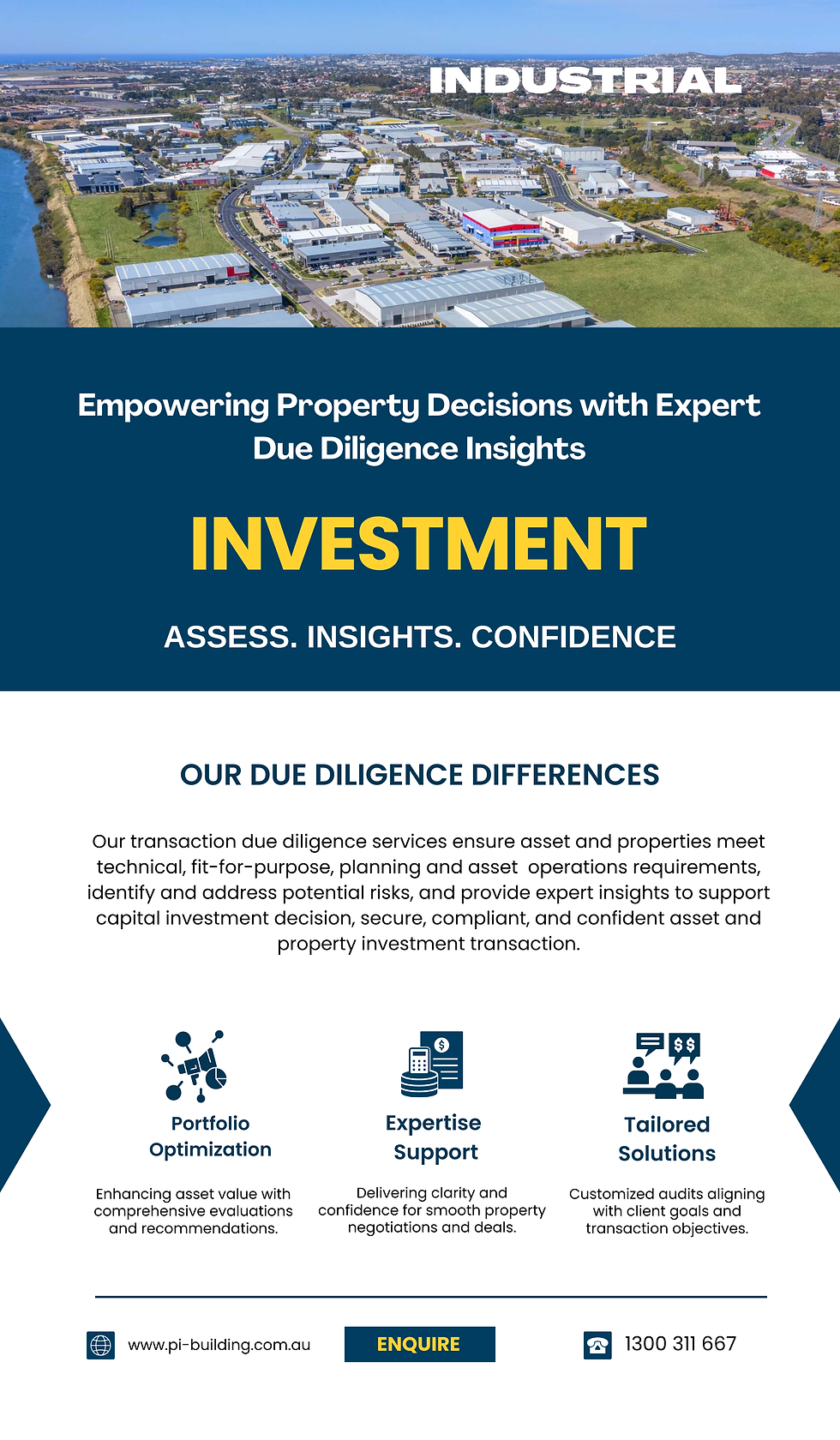
Key Steps in Conducting the Due Diligence Audit
Engage Professionals
In most cases, a range of professionals such as building inspectors, engineers, environmental consultants, surveyors, and legal advisors are involved in conducting a comprehensive due diligence audit. Each expert brings specialized knowledge to assess specific aspects of the property.
Site Inspection
A physical inspection of the property is carried out to assess the building's structural integrity, services, and overall condition. This includes identifying any potential hazards, damages, or areas needing improvement.
Document Review
Collect and review all relevant property documents, including building permits, planning approvals, environmental reports, leases, and financial statements.
Report Compilation
Once the inspection and document review are complete, a detailed report is prepared summarizing the findings. This report will highlight any risks, compliance issues, financial implications, or maintenance needs associated with the property.
Negotiate or Reassess
Based on the due diligence findings, the buyer or tenant may negotiate the terms of the transaction, seek price reductions, or request repairs or adjustments. In some cases, the buyer may decide to walk away from the deal if the risks are too high.
Importance of Due Diligence in Commercial Property Transactions
Risk Mitigation
The due diligence process ensures that potential risks or hidden problems with the property are identified before the transaction is completed, reducing the likelihood of unexpected costs or legal disputes after purchase.
Informed Decision-Making
It helps buyers make informed decisions based on a comprehensive understanding of the property’s condition, compliance, financial performance, and any future liabilities.
Legal and Regulatory Compliance
Ensures the property complies with all relevant laws, regulations, and codes, minimizing the risk of legal issues post-purchase.
Investment Protection
By evaluating the property's financial health and long-term operational costs, buyers can better assess whether the property is a sound investment.